Relationship and Childhood Patterns Therapy | Vida Collective
Therapy for relationship and childhood patterns at Vida Collective Counseling helps women understand why certain dynamics, triggers, or emotional responses keep showing up in their relationships. We are a women-focused therapy practice serving Little Rock, AR and nearby areas, offering trauma-informed, attachment-based care.
If you find yourself repeating the same relationship struggles, feeling overwhelmed by emotional reactions that seem bigger than the moment, or noticing that closeness and trust feel complicated, this work may be right for you. Many of these patterns are rooted in early childhood and attachment experiences that shaped how your nervous system learned to connect, protect, and respond to others.
Let's explore how relationship and childhood patterns develop, and how therapy can support you in creating safer, more fulfilling connections.
What are relationship and childhood patterns?
Relationship and childhood patterns are learned ways of relating to others that develop early in life, often shaped by our caregivers, environment, and emotional experiences. These patterns influence how we attach, communicate, set boundaries, and respond to closeness or conflict.
Attachment patterns are not conscious choices. They are nervous system responses that once helped you stay safe, connected, or emotionally regulated. Over time, these patterns can show up in adult relationships, sometimes creating distance, anxiety, people pleasing, or emotional shutdown.
Therapy focused on relationship and childhood patterns helps bring awareness to these dynamics and gently supports your nervous system in learning new, more secure ways of relating.
Common signs your attachment patterns may be impacting your relationships
Therapy focused on attachment patterns may be helpful if you experience:
- Repeating relationship dynamics that leave you feeling unseen or disconnected
- Fear of abandonment or discomfort with emotional closeness
- People pleasing, over giving, or difficulty setting boundaries
- Emotional shutdown during conflict or stressful interactions
- Strong reactions to rejection, criticism, or distance
- A sense that your responses feel automatic and hard to control
These patterns are not flaws. They are learned survival strategies shaped by early experiences.
How do I know if therapy for relationship and childhood patterns is right for me?
You may benefit from this work if you find yourself asking questions like:
- Why do I keep ending up in the same relationship dynamics?
- Why does closeness feel overwhelming or unsafe at times?
- Why do I react so strongly to things that seem small to others?
- Do I struggle to trust, depend on others, or feel emotionally secure?
- Have I done personal growth work but still feel stuck in old patterns?
Therapy focused on attachment patterns can help you move from awareness to embodied change.
How we approach relationship and childhood patterns therapy in Little Rock, AR and nearby areas
At Vida Collective Counseling, we approach relationship and childhood patterns through a trauma informed, attachment focused lens that prioritizes nervous system safety and emotional attunement. Our work together may include:
- Exploring early experiences and how they shaped your attachment patterns
- Identifying how these patterns show up in present day relationships
- Building emotional awareness and regulation skills
- Gently practicing new ways of relating that feel safer and more secure
- Supporting integration so change feels sustainable, not forced
We believe healing happens when the nervous system feels supported enough to try something new.
What can we work on in therapy focused on attachment patterns?
Therapy focused on relationship and childhood patterns can support growth and healing around:
- Attachment wounds and relational trauma. Exploring early experiences of connection, loss, or inconsistency that shaped how your nervous system learned to bond, protect, or distance itself.
- Anxiety or avoidance in close relationships. Understanding why closeness may feel overwhelming, unsafe, or hard to sustain, even when you desire connection.
- Boundaries, people pleasing, and emotional regulation. Learning to recognize when you are over giving, self abandoning, or shutting down, and practicing more balanced, regulated responses.
- Childhood experiences that continue to influence adult life. Gently unpacking how early roles, expectations, or unmet needs still show up in your relationships today.
- Self worth, trust, and emotional safety. Rebuilding a sense of internal safety so connection no longer feels threatening or conditional.
Building more secure and fulfilling connections. Developing new ways of relating that feel mutual, steady, and aligned with who you are now.
Each session is guided by your readiness, goals, and nervous system capacity, honoring both your pace and your lived experience.
How it works:
Start with a safe space to talk
We’ll begin by understanding your story, what’s been working, what hasn’t, and what you truly want to feel. This first step is about slowing down and creating safety, so you don’t have to carry it all alone.
Get to the root of what’s keeping you stuck.
Together, we’ll look beneath the surface to uncover patterns, beliefs, and emotions that have been shaping your life. You’ll gain clarity and practical tools to respond differently instead of falling into old cycles.
Build lasting change from the inside out.
As therapy unfolds, you’ll start to feel more grounded, confident, and connected, learning to trust yourself and live in alignment with who you truly are.
Relationship and childhood patterns specialists in Arkansas
At Vida Collective Counseling, we specialize in working with women who want to understand how their attachment patterns impact their relationships, emotions, and sense of self.
Our team understands that these patterns are deeply rooted and often tied to early experiences. We create a space where exploration feels compassionate, grounded, and respectful of your lived experience.
Tips and resources to support your healing with relationship and childhood patterns work
Alongside therapy, you may find it helpful to support your relational healing in gentle, intentional ways:
- Notice your emotional and physical responses during connection or conflict. Pay attention to sensations like tightness, urgency, or shutdown, as these can offer valuable insight into your attachment patterns.
- Practice pausing before reacting to relational triggers. Creating even a small pause can help your nervous system settle and allow for more intentional responses.
- Reflect on patterns without judgment or self blame. Awareness grows when curiosity replaces criticism, making change feel safer and more sustainable.
- Seek relationships that feel safe, consistent, and respectful. Healing often happens through experiences of reliability and emotional presence, not intensity.
- Allow yourself to receive support rather than always being the strong one. Letting others show up for you can be a powerful step toward secure connection.
Healing attachment patterns is not a quick process. It unfolds through time, safety, and compassion, both within yourself and in relationship with others.
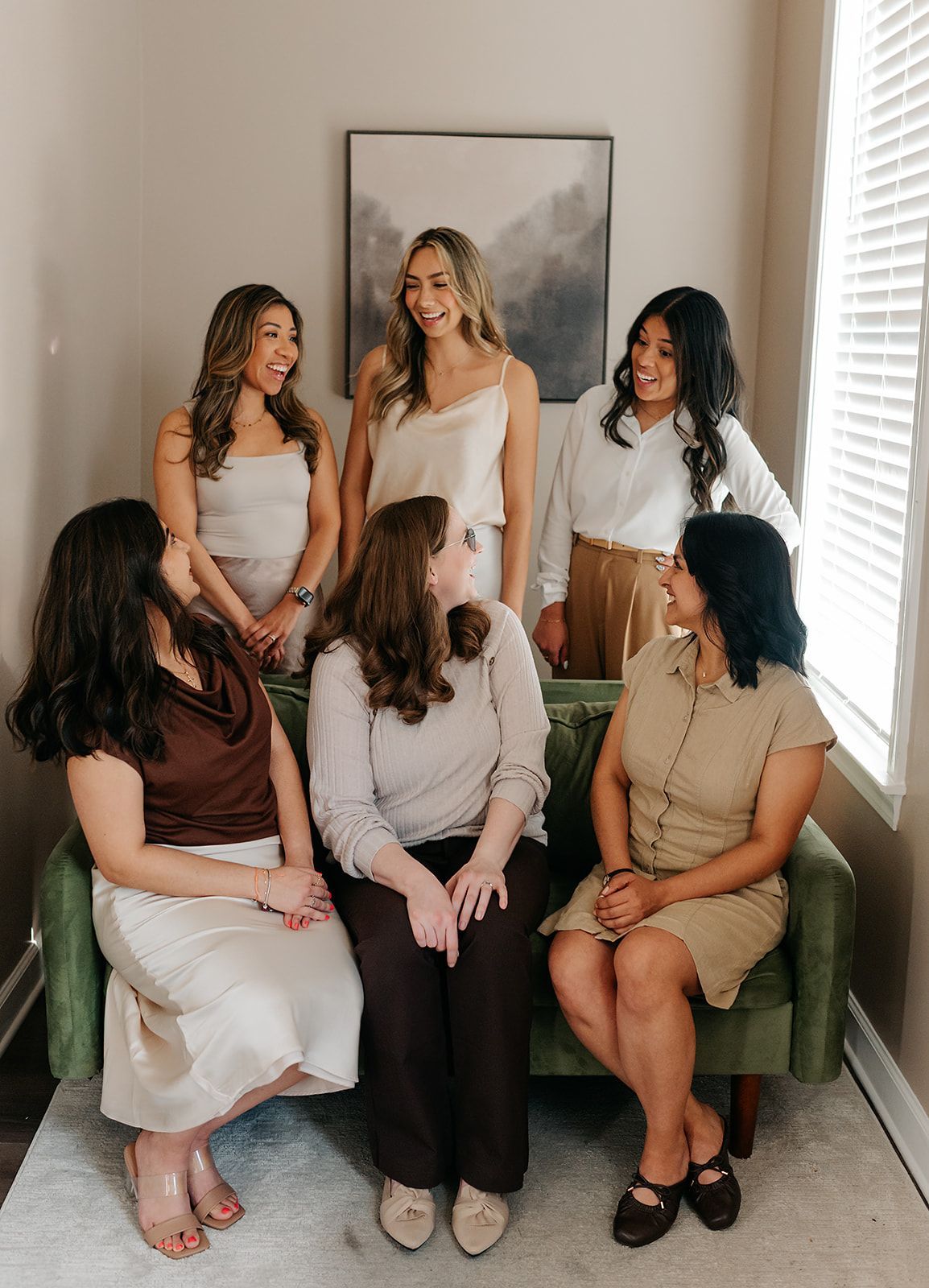
Hi, We’re Vida Collective
Vida Collective is a therapy practice that supports women in slowing down, feeling supported, and reconnecting with themselves in a grounded, compassionate space.
We offer in-person therapy in Little Rock and in-person therapy in Conway. We also serve clients virtually across Arkansas.
At Vida Collective Counseling, we believe therapy should feel accessible, transparent, and human, not confusing or transactional. Our goal is to help you find care that fits your needs and your season of life.
Investment:
Session rates range from $110–$175, depending on the therapist’s credentials, service type, and insurance coverage.
We are in-network with select insurance providers, and out-of-pocket costs vary depending on your plan’s benefits.
Payment & Investment
Individual Therapy with a Licensed Associate Counselor (LAC)
CONTACTFor clients not using insurance, our Licensed Associate Counselors provide high-quality, affordable care with flexible payment options.
Investment:
- Intake Session (53 minutes): $130
- Standard Session (53 minutes): $110
Includes:
- One 53-minute therapy session (virtual or in-person)
- Personalized resources and tools to support your growth
- Secure messaging for scheduling
Private-Pay Packages (for ongoing sessions after the intake)
CONTACT- 3-Session Package – $315
- 6-Session Package – $594
Packages begin after your intake session and are designed to provide consistent, focused support at a reduced rate.
Clients may discontinue services at any time; unused sessions are refundable.
Package rates apply only to private-pay sessions with Licensed Associate Counselors and cannot be combined with insurance benefits. These rates reflect administrative savings and are designed to make consistent care more accessible.
Therapy with a Licensed Professional Counselor (LPC)
CONTACTOur Licensed Professional Counselors are in-network with select insurance providers.
Out-of-pocket costs vary depending on your coverage, deductible, and copay.
Private pay sessions are also available upon request.
Please contact us to confirm the rate specific to your plan or session type.
Couples & Family Therapy
CONTACTInvestment: Sessions range from $150–$175, depending on the provider.
Includes:
- Joint sessions designed to strengthen connection and communication
- Practical tools and guided exercises to foster understanding and repair
Community Access & Scholarships
CONTACTWhile we do not offer a sliding scale, Vida Collective Counseling provides a limited number of scholarships through our Community Initiative to make therapy more accessible for those experiencing financial hardship.
If you would like to be considered, please reach out to inquire about current availability.
FAQ
Can attachment patterns really change?
Yes. Attachment patterns are learned, which means they can shift with awareness, support, and new experiences of safety. Therapy helps your nervous system learn that connection can feel different than it did in the past.
Do I have to focus on my childhood to do this work?
Not necessarily. While early experiences help explain attachment patterns, therapy focuses on how these patterns show up in your life today. We move at a pace that feels supportive and relevant to your current needs.
How long does therapy for attachment patterns take?
The length of therapy varies based on your goals, history, and relationships. Some people notice changes early, while others benefit from deeper, longer term work. Your therapist will collaborate with you to find a pace that feels right.
Is this type of therapy emotionally intense?
Exploring relationship and childhood patterns can bring up emotions, but therapy is guided with care and regulation in mind. You are never pushed beyond what feels manageable, and safety is always prioritized.
Can this help even if I am not currently in a relationship?
Absolutely. Attachment patterns show up in many areas of life, including friendships, family dynamics, and your relationship with yourself. This work can support emotional growth regardless of relationship status.
Good Faith Estimate
You have the right to receive a “Good Faith Estimate” explaining how much your medical care will cost.
Under the law, health care providers need to give patients who don’t have insurance or who are not using insurance an estimate of the bill for medical items and services.
- You have the right to receive a Good Faith Estimate for the total expected cost of any non-emergency items or services. This includes related costs like medical tests, prescription drugs, equipment, and hospital fees.
- Make sure your health care provider gives you a Good Faith Estimate in writing at least 1 business day before your medical service or item. You can also ask your health care provider, and any other provider you choose, for a Good Faith Estimate before you schedule an item or service.
- If you receive a bill that is at least $400 more than your Good Faith Estimate, you can dispute the bill.
- Make sure to save a copy or picture of your Good Faith Estimate. For questions or more information about your right to a Good Faith Estimate, visit www.cms.gov/nosurprises or call 800-985-3059.
To request a Good Faith Estimate or for more information, please contact us using the information below.
Provider Information Vida Collective Counseling
420 E 21st Street, Suite G Little Rock, AR 72206
Phone: (501) 300-7456
Website: www.vidacollective.co
For more information about your rights under federal law, visitwww.cms.gov/nosurprises.
Additional Notes
Our office is located on the second floor and is currently not wheelchair accessible. If a client requires accommodations or has mobility limitations, we’re happy to meet with them via secure telehealth sessions to ensure they can still access care comfortably.
The name of the plaza where we are located is called Pettaway Square.