Bilingual Mental Health Services: Therapy in Spanish and English for Women in Arkansas

Ana Eldridge • May 19, 2026

There are things you can explain in a second language. Your schedule. Your responsibilities. The basic outline of your day. But when it comes to emotions, especially the ones you have been carrying for years, language works differently. Words are not just words. They hold tone, history, and meaning that do not always translate the same way.


For many women, especially those who grew up navigating more than one culture, this becomes clear the moment they try to talk about something real. You pause more. You search for the right word. You simplify something that is not actually simple. And without realizing it, you start editing your own experience just to make it easier to communicate.


That is where bilingual therapy becomes something more than a convenience. It becomes a space where you do not have to filter yourself in the same way. Where you can move between languages naturally, and in doing so, access parts of your experience that might otherwise stay hidden or hard to reach.


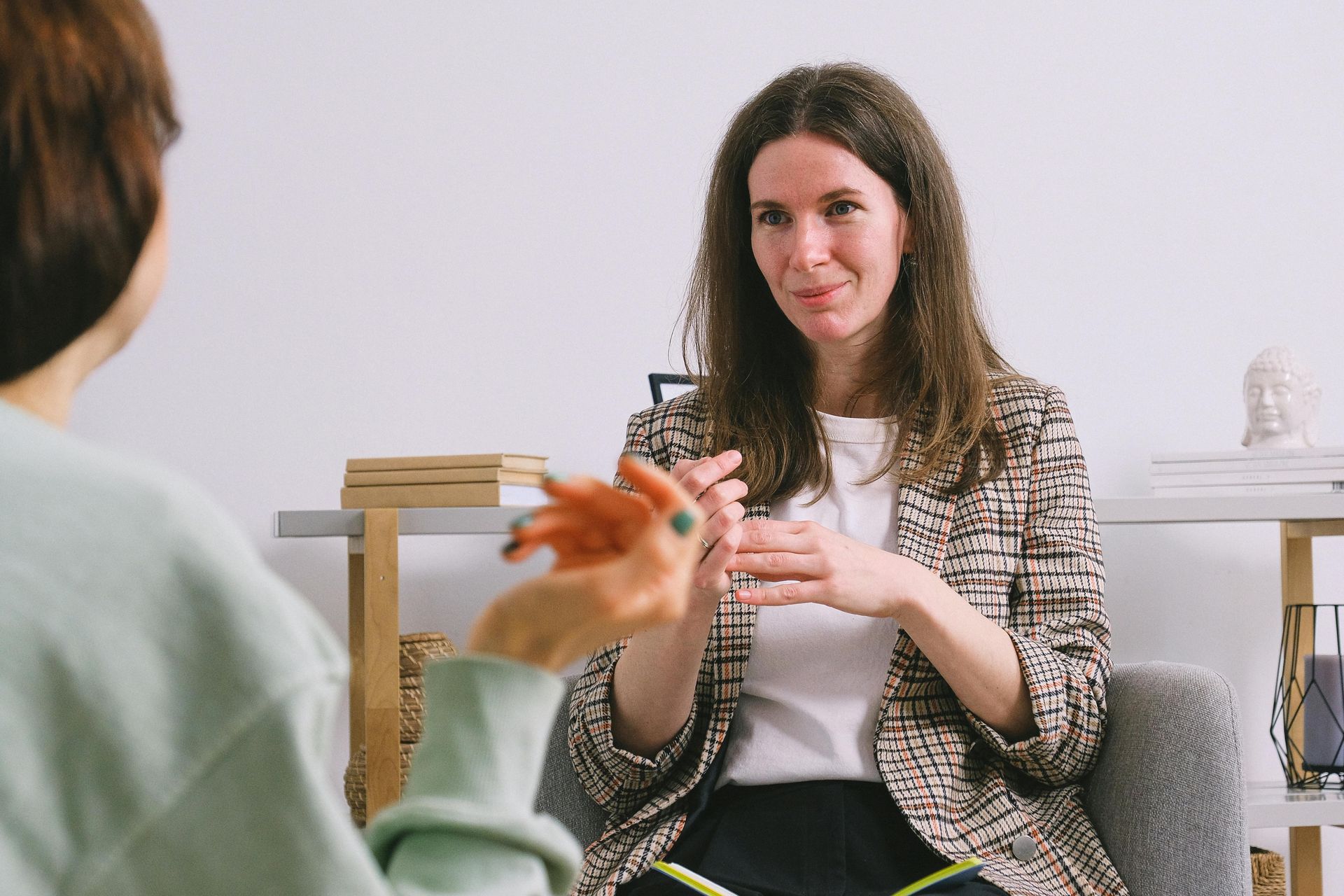
In Arkansas, more women are beginning to look for bilingual therapy not just because they speak Spanish or English, but because they want to feel understood without having to explain every layer of their identity. At Vida Collective Counseling, we offer therapy for women in both English and Spanish, creating a space rooted in curiosity, compassion, and connection, where your experience is met as it is, not simplified.


What is bilingual therapy, and who is it for?


Bilingual therapy is not only about speaking two languages during a session. It is about working with a therapist who understands how language, culture, and identity are connected. It allows you to express yourself in the language that feels most natural in the moment, without having to choose one version of yourself over another.

The benefits of bilingual therapy for women


For many women, bilingual therapy offers a level of emotional access that feels different from traditional therapy. It reduces the effort required to translate your thoughts and allows you to focus on understanding them instead.

It also creates a stronger sense of safety. When your therapist understands both your language and your cultural context, you do not have to explain the background behind your experiences. That shared understanding allows the work to go deeper more quickly and with less resistance.

Language shapes how we understand ourselves. The way you describe your emotions in Spanish may carry a different weight than how you describe them in English. Some feelings do not translate directly, and when you are forced to explain them in a way that does not fully match, something gets lost.


In therapy, that loss matters. It can create distance between what you are feeling and what you are able to express. Over time, that distance can make it harder to fully process your experience. Bilingual therapy removes that barrier, allowing you to speak in the way that feels most accurate and natural.


Bilingual therapy can also support women navigating identity, family expectations, or generational patterns. These are often tied to language and culture, making it even more important to have a space where those layers are understood.
Bilingual Mental Health Services: Therapy in Spanish and English for Women in Arkansas

Mental health in Hispanic and first-generation women


Mental health is still highly stigmatized in many Hispanic communities.

Research shows that Hispanic adults are significantly less likely to access mental health services compared to non-Hispanic white populations, often due to stigma, language barriers, and lack of culturally aligned care.

For first-generation women, the experience can feel even more complex.


You may be navigating:


  • Pressure to succeed and support your family
  • Unspoken expectations to stay strong
  • Cultural values that do not always leave space for emotional expression


At the same time, you may be balancing two identities, two languages, and two ways of seeing the world.


This creates a unique kind of emotional weight.


It often shows up as:


  • Chronic stress or anxiety
  • Emotional exhaustion
  • Guilt when prioritizing yourself
  • Difficulty setting boundaries
  • Feeling misunderstood even when supported


These are not isolated experiences. They are patterns we see consistently in first-generation and Hispanic women navigating mental health without the right kind of support.

Bilingual Mental Health Services: Therapy in Spanish and English for Women in Arkansas

Culturally sensitive therapy changes the process


When therapy does not take culture into account, it can feel like you are constantly explaining yourself.


  • Explaining your family dynamics. 
  • Explaining your values.
  • Explaining why certain things feel difficult.


This slows down the process and creates distance.


Culturally sensitive therapy removes that barrier.


It allows your therapist to understand:

  • The role of family in your life
  • The expectations you may be carrying
  • The cultural lens through which you experience emotions


This creates a space where you can go deeper without needing to translate your experience first.


How to know if bilingual therapy is right for you


If you find yourself struggling to fully express your emotions in one language, or if you feel that parts of your experience are tied to your cultural background, bilingual therapy may be a better fit. It allows for a more natural process, one that does not require you to adjust how you communicate in order to be understood.


You deserve to feel understood without translating yourself


You should not have to filter your thoughts or simplify your experiences to be understood. Therapy should feel like a space where you can speak freely, think clearly, and explore your emotions without having to adjust who you are.

Bilingual therapy is not about adding something extra. It is about removing the barrier that has been there all along.


At Vida Collective Counseling, we offer bilingual therapy for women in Arkansas for women who want to feel understood in both language and experience. Our work is rooted in curiosity, compassion, and connection, creating a space where you can show up fully without needing to translate yourself.


If you are ready to start therapy in a way that feels natural and supportive, we invite you to reach out.

Hi! We are Vida Collective Counseling

Vida Collective is a therapy practice that supports women in slowing down, feeling supported, and reconnecting with themselves in a grounded, compassionate space.

Burnout therapy for women feeling emotionally exhausted and overwhelmed
By Ana Eldridge May 20, 2026
Therapy for burnout, emotional overwhelm, and chronic stress in women. Compassionate support for nervous system healing in Little Rock, AR.
The ultimate checklist: How to find the right female or latina therapist in Little Rock
By Ana Eldridge May 19, 2026
Find the right female or Latina therapist in Little Rock AR with this ultimate checklist. Learn what to look for and how therapy for women can help.
When to see a depression therapist: signs of depression in women
By Ana Eldridge May 19, 2026
Not feeling like yourself? Learn the signs of depression in women and when it may be time to seek support from a depression therapist.