High-functioning anxiety therapy | Bilingual care for women
From the outside, everything looks handled. You are the one who remembers the details, answers the text right away, shows up early and does it well. People call you reliable, organized, strong. What they do not see is the mind that never turns off, the jaw that stays clenched, the sense that if you stop moving for even a moment, something will fall apart. You may not call it anxiety because you are still getting everything done. But getting everything done while your body stays braced is its own kind of tired.
In case you are new here, we are Vida Collective Counseling, bilingual, trauma-informed therapy for women. If you are looking for support with high-functioning anxiety therapy, you are in the right place. Below we will explore what high-functioning anxiety is, how it tends to show up in dependable women, how we work with it, and what it can feel like to finally set some of it down.
What is high-functioning anxiety?
High-functioning anxiety is not an official diagnosis. It is a way of describing anxiety that fuels performance instead of stopping it. The worry, the overthinking and the fear of letting people down are all there, but they are channeled into preparing, pleasing, achieving and staying busy. Because the results look good, the anxiety often goes unnoticed, even by the person living with it. For many women, especially those raised to be the responsible one or the first to make it, this pattern started early and was rewarded. The nervous system learned that staying alert and useful kept things safe. High-functioning anxiety therapy helps you understand that pattern with compassion, so you can keep your strengths without being run by fear.
Most common symptoms of high-functioning anxiety
- Over preparing: You rehearse conversations, triple check emails and plan for every possible outcome. It looks like diligence, but inside it is a constant effort to avoid being caught off guard.
- Trouble resting: Days off feel uncomfortable. You fill them with errands or feel guilty when you sit down, and true relaxation rarely arrives even when nothing needs doing.
- People pleasing: You say yes before checking with yourself and worry afterward about how you came across. Your own needs quietly move to the bottom of the list.
- Perfectionism: Good enough feels risky. You redo work that was already fine and take small mistakes as proof that you are falling behind.
- Physical tension: Tight shoulders, clenched jaw, headaches, stomach trouble or shallow breathing become so familiar that you stop noticing them until your body forces you to.
- Racing mind at night: You are exhausted, yet your thoughts keep reviewing the day or previewing tomorrow. Sleep comes late and feels light.
- Irritability with the people closest to you: You are patient and polished with everyone else, then snap at home, because that is where the last bit of your energy runs out.
- Fear of slowing down: Underneath the busyness is a sense that if you stop, the feelings you have been outrunning will catch up.
How do I know if I may be experiencing high-functioning anxiety?
Sometimes the clearest way to recognize this pattern is not by looking at what you do, but at how it feels to be you. Take a slow breath and sit with these questions.
- Do I feel like I am only as valuable as what I accomplish? Praise for being dependable can start to feel like a job you can never quit.
- Do I feel calm only when everything and everyone around me is taken care of? Your peace may depend on conditions you cannot fully control.
- Do I secretly wish someone would notice how much I am carrying, while making sure no one ever does? Being the strong one can be lonely.
- Do I feel a small wave of dread when my phone buzzes or my inbox fills, even when nothing is wrong? The body reacts before the mind has a chance to reason.
- Do I struggle to name what I actually feel, beyond "fine" or "busy"? Years of staying functional can leave emotions out of reach.
- Do I tell myself I have no right to complain because my life looks good? You can be grateful for your life and still admit that you are tired.
Who this support is for
This support may be a strong fit if you:
- Are a high achieving woman whose anxiety hides behind competence, and you are ready to understand what is underneath it.
- Grew up as the responsible one, the translator, the peacekeeper or the first to succeed, and feel the weight of that role in your body.
- Want therapy that honors your culture, your family and your drive rather than asking you to become someone else.
- Are tired of coping strategies that only work on the surface and want change that reaches your nervous system.
- Would like the option of working in English, Spanish or a mix of both.
This approach may not be the best fit if you:
- Are in a moment of crisis or having thoughts of harming yourself. Please contact the 988 Suicide and Crisis Lifeline or your nearest emergency room first; we would be glad to support you once you are safe.
- Are mainly looking for medication management. We are happy to collaborate with a prescriber alongside therapy, but we do not prescribe.
How we treat high-functioning anxiety
We believe people are not broken; they have learned to survive by disconnecting from themselves. Overfunctioning is a survival skill, and it worked. Our approach to high-functioning anxiety therapy starts there, with respect for what your drive has protected. Through nervous system focused, trauma-informed talk therapy, we look at why your body learned that slowing down is unsafe and what it needs in order to believe otherwise. We use CBT to gently untangle the perfectionistic and catastrophic thought loops that keep the engine running, because those thoughts are often the fuel behind the tension. When the pull to over function is rooted in earlier experiences, such as growing up in a home where you had to be the steady one, we may offer Brainspotting or EMDR, which help the brain and body process what talking alone cannot reach. And we teach practical regulation skills you can use between sessions, so the calm you find in the room begins to follow you home.
Sessions are 50 minutes and usually weekly at first, in person at our offices or virtually. Early sessions focus on slowing down enough to notice what your body is doing and building safety with your therapist. From there we move between insight, processing and skills, at a pace that never asks you to fall apart in order to heal.
Progress in high-functioning anxiety therapy is often quiet. You catch yourself before saying yes. You send the email without rereading it five times. You lie down on a Sunday and your chest does not tighten. Over time, the tension you thought was your personality loosens, and you discover that you can still be excellent without being afraid.
What working together looks like
Your first session is a conversation, not an evaluation. Your therapist will want to know your story, what has been feeling heavy and what you hope will be different. Together you will decide how often to meet and which approaches make sense, and you can revisit that as things shift. We work collaboratively, which means you set the pace and we walk beside you. You can meet in person or online, in English, Spanish or both, whichever lets you speak most freely.
Steps to work with us
1. Reach out
Fill out our contact form or give us a call to request a free consultation. There is no need to have the right words ready; a simple "I think I need support" is enough.
2. Have a short consultation call
We listen to what is going on, answer your questions about fees, insurance and scheduling, and match you with the therapist and language that fit you best.
3. Begin your first session
We get to know you, your story and your goals at your pace, then decide together on frequency and approach. From there, the work unfolds one steady step at a time.
What topics can we work on in therapy for high-functioning anxiety?
- Separating your worth from your output: learning to feel valuable on the days you do less.
- Setting boundaries without guilt: practicing a kind no with family, work and friends, and tolerating the discomfort that follows.
- Making rest feel safe: helping your body understand that stillness is not danger.
- Softening perfectionism: finding the difference between high standards and fear of failure.
- Reconnecting with your emotions: naming what you feel with more range than fine, stressed or busy.
- Healing the roots of over functioning: understanding the early roles and family dynamics that taught you to stay on guard.
- Honoring your culture and your needs at the same time: blooming within your roots instead of choosing between them.
- Building a life that feels like yours: moving from surviving well to actually living.
How it works:
Start with a safe space to talk
We’ll begin by understanding your story, what’s been working, what hasn’t, and what you truly want to feel. This first step is about slowing down and creating safety, so you don’t have to carry it all alone.
Get to the root of what’s keeping you stuck.
Together, we’ll look beneath the surface to uncover patterns, beliefs, and emotions that have been shaping your life. You’ll gain clarity and practical tools to respond differently instead of falling into old cycles.
Build lasting change from the inside out.
As therapy unfolds, you’ll start to feel more grounded, confident, and connected, learning to trust yourself and live in alignment with who you truly are.
High-functioning anxiety specialists

Tips and resources for coping with high-functioning anxiety
- Lengthen your exhale. A slow out breath that lasts longer than the in breath sends a direct signal of safety to your nervous system. Try it for one minute before opening your inbox.
- Do a body scan at transitions. When you close your laptop or park the car, notice your jaw, shoulders and hands. Unclench on purpose. Small releases add up.
- Put a pause between the request and the yes."Let me check and get back to you" is a complete sentence. It gives your body time to catch up with your mind.
- Practice being seen resting. Sit down while someone else is still working. Notice the discomfort, breathe, and stay a little longer than feels natural.
- Finish at good enough once a day. Choose one low stakes task and stop at the first acceptable version. Let your nervous system learn that nothing bad happens.
- Move your body to complete the stress cycle. A brisk walk or a few minutes of shaking out your arms helps discharge the adrenaline that overthinking builds up.
- Reputable resources: the National Alliance on Mental Illness (NAMI), the National Institute of Mental Health (NIMH) and the Therapy for Latinx directory offer trustworthy information and support.
You do not have to keep holding it together alone
You have mastered getting everything done. Now imagine doing it without the constant hum of dread underneath. If you are ready to explore high-functioning anxiety therapy with someone who understands both the pressure and the culture behind it, request a free consultation. We will listen, answer your questions and help you find the therapist and language that feel right.
Not sure yet? That is okay. You are welcome to meet our therapists and get a feel for who we are, or send us a question through the contact form whenever you are ready.

Hi, We’re Vida Collective
Vida Collective is a therapy practice that supports women in slowing down, feeling supported, and reconnecting with themselves in a grounded, compassionate space.
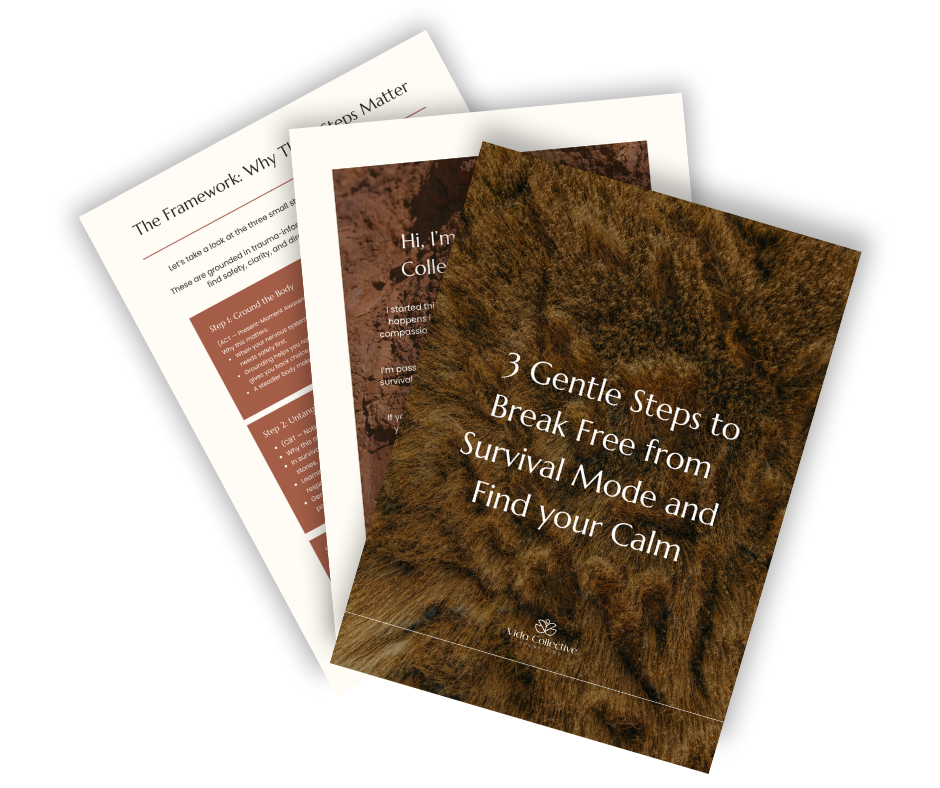
We offer in-person therapy in Little Rock and in-person therapy in Conway. We also serve clients virtually across Arkansas.
At Vida Collective Counseling, we believe therapy should feel accessible, transparent, and human, not confusing or transactional. Our goal is to help you find care that fits your needs and your season of life.
Investment:
Session rates range from $110–$175, depending on the therapist’s credentials, service type, and insurance coverage.
We are in-network with select insurance providers, and out-of-pocket costs vary depending on your plan’s benefits.
Payment & Investment
Individual Therapy with a Licensed Associate Counselor (LAC)
CONTACTFor clients not using insurance, our Licensed Associate Counselors provide high-quality, affordable care with flexible payment options.
Investment:
- Intake Session (53 minutes): $130
- Standard Session (53 minutes): $110
Includes:
- One 53-minute therapy session (virtual or in-person)
- Personalized resources and tools to support your growth
- Secure messaging for scheduling
Private-Pay Packages (for ongoing sessions after the intake)
CONTACT- 3-Session Package – $315
- 6-Session Package – $594
Packages begin after your intake session and are designed to provide consistent, focused support at a reduced rate.
Clients may discontinue services at any time; unused sessions are refundable.
Package rates apply only to private-pay sessions with Licensed Associate Counselors and cannot be combined with insurance benefits. These rates reflect administrative savings and are designed to make consistent care more accessible.
Therapy with a Licensed Professional Counselor (LPC)
CONTACTOur Licensed Professional Counselors are in-network with select insurance providers.
Out-of-pocket costs vary depending on your coverage, deductible, and copay.
Private pay sessions are also available upon request.
Please contact us to confirm the rate specific to your plan or session type.
Couples & Family Therapy
CONTACTInvestment: Sessions range from $150–$175, depending on the provider.
Includes:
- Joint sessions designed to strengthen connection and communication
- Practical tools and guided exercises to foster understanding and repair
Community Access & Scholarships
CONTACTWhile we do not offer a sliding scale, Vida Collective Counseling provides a limited number of scholarships through our Community Initiative to make therapy more accessible for those experiencing financial hardship.
If you would like to be considered, please reach out to inquire about current availability.
FAQ
What to do for high-functioning anxiety?
Start by taking it seriously, even though you are still functioning. Many women wait until burnout or a health scare to get support, because it never felt "bad enough." It does not have to reach that point. Begin noticing when you are operating from fear rather than choice, and gently experiment with doing slightly less. Working with a therapist who understands the nervous system can make a real difference, because this pattern lives in the body as much as in the mind. Talking with someone who gets it also breaks the isolation of being the strong one.
What are 7 signs of high-functioning anxiety?
Seven signs people often describe are: a mind that will not quiet down even when you are tired; a need to stay busy in order to feel okay; difficulty accepting compliments or believing you have done enough; nervous habits like nail biting, hair twirling or leg bouncing; comparing yourself constantly and still coming up short; a strong dislike of surprises or changes in plans; and a pattern of being calm in a crisis but overwhelmed by small things. If several of these sound familiar, you are not imagining it, and it can get lighter.
What's the 3-3-3 rule for anxiety?
The 3-3-3 rule is a simple grounding exercise: name three things you can see, three sounds you can hear, and move three parts of your body. It is not a treatment, and it will not change the pattern underneath high-functioning anxiety, but it can interrupt a spiral in the moment by bringing your attention back to the present. Think of it as a first aid tool. It works best alongside deeper support, where you address why your body goes on alert in the first place, so you need the emergency tools less often over time.
What is the #1 worst habit for anxiety?
There is no single worst habit, but one that hits high functioning women especially hard is avoidance disguised as productivity. Staying busy feels responsible, yet it keeps you from ever feeling the anxiety long enough for it to settle. The body never gets the message that the threat has passed. Close behind are chronic sleep deprivation and running on caffeine instead of food and rest, both of which keep the nervous system primed for alarm. Noticing these habits without shame is the first step toward loosening them.
What organ is most affected by anxiety?
Anxiety involves the whole body, but the brain and the gut tend to feel it most. The brain's alarm center stays active, which affects focus, memory and sleep. The digestive system is closely linked to the nervous system, so many people experience stomachaches, nausea, appetite changes or irritable bowel symptoms. The heart also works harder, and long term muscle tension can lead to headaches and pain. This is why tending to your nervous system is not just emotional care; it is physical care too. Your body is asking to be listened to.
Good Faith Estimate
You have the right to receive a “Good Faith Estimate” explaining how much your medical care will cost.
Under the law, health care providers need to give patients who don’t have insurance or who are not using insurance an estimate of the bill for medical items and services.
- You have the right to receive a Good Faith Estimate for the total expected cost of any non-emergency items or services. This includes related costs like medical tests, prescription drugs, equipment, and hospital fees.
- Make sure your health care provider gives you a Good Faith Estimate in writing at least 1 business day before your medical service or item. You can also ask your health care provider, and any other provider you choose, for a Good Faith Estimate before you schedule an item or service.
- If you receive a bill that is at least $400 more than your Good Faith Estimate, you can dispute the bill.
- Make sure to save a copy or picture of your Good Faith Estimate. For questions or more information about your right to a Good Faith Estimate, visit www.cms.gov/nosurprises or call 800-985-3059.
To request a Good Faith Estimate or for more information, please contact us using the information below.
Provider Information Vida Collective Counseling
420 E 21st Street, Suite G Little Rock, AR 72206
Phone: (501) 300-7456
Website: www.vidacollective.co
For more information about your rights under federal law, visitwww.cms.gov/nosurprises.
Additional Notes
Our office is located on the second floor and is currently not wheelchair accessible. If a client requires accommodations or has mobility limitations, we’re happy to meet with them via secure telehealth sessions to ensure they can still access care comfortably.
The name of the plaza where we are located is called Pettaway Square.