Understanding anxiety symptoms in high-functioning women: signs, support, and healing
There is a version of anxiety that most people expect.
It looks overwhelming, visible, and hard to ignore.
But that is not the version many high-functioning women experience.
Instead, it looks like having everything together on the outside while feeling constantly on edge inside. You are productive, responsible, and dependable. You show up. You follow through. You handle things.
But internally, your mind does not slow down.
You overthink small decisions. You replay conversations. You feel pressure to get everything right. And even when things are fine, your body does not fully relax.
If this sounds familiar, you are not alone.
This is often how anxiety symptoms show up in high-functioning women, especially those who have been used to carrying responsibility for a long time.
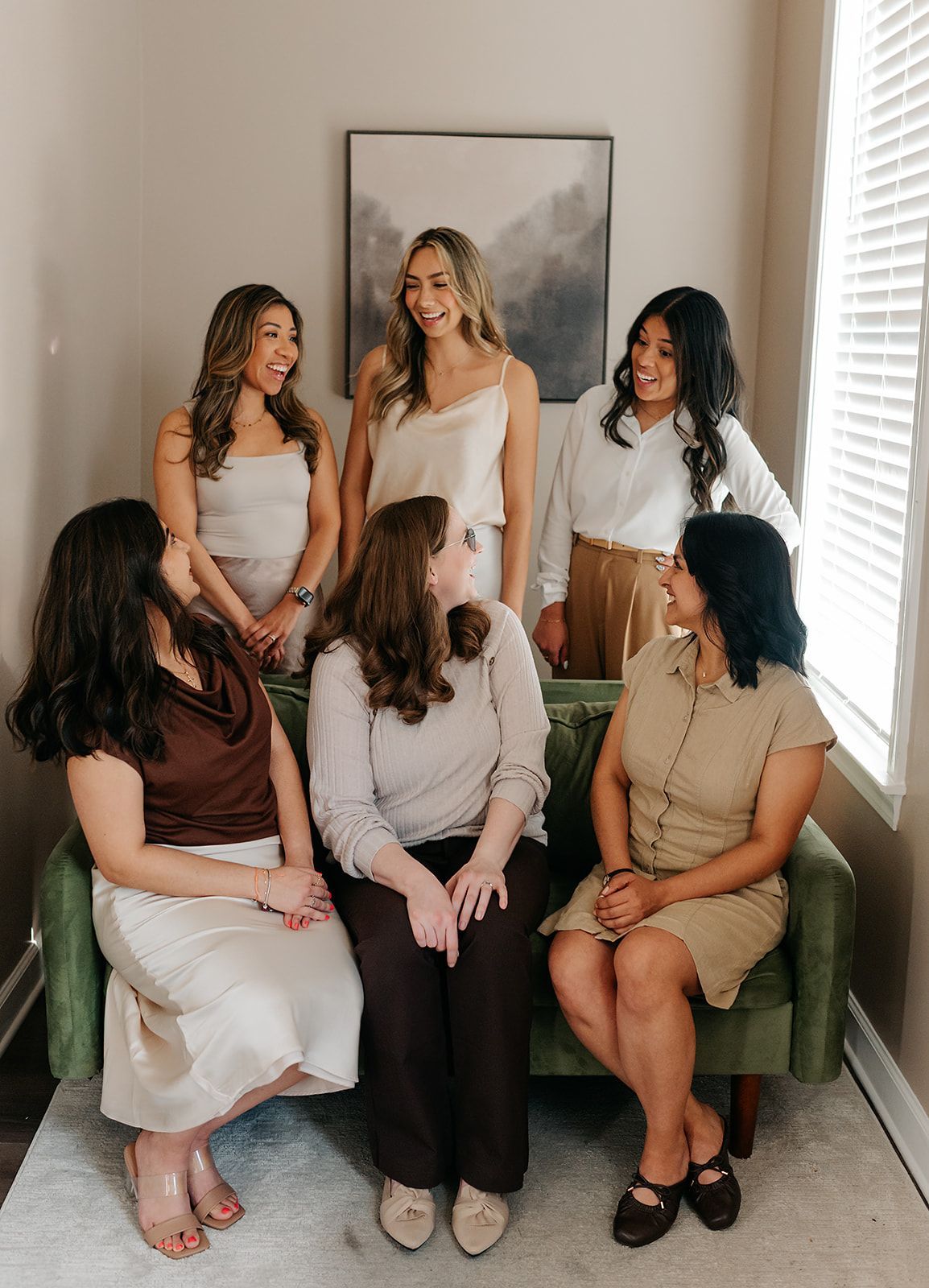
At Vida Collective Counseling, we are a group of female therapists. Our approach to therapy for women is rooted in curiosity, compassion, and connection, helping you move out of survival mode and back into a way of living that feels more sustainable.
What is anxiety?
Anxiety is a natural response to perceived threat or uncertainty.
It involves both the mind and the body. Mentally, it shows up as anticipation, worry, or a focus on what could go wrong. Physically, it activates your nervous system, increasing alertness, tension, and readiness to act.
In short, anxiety is your system preparing you for something it believes might require action.
This response is not inherently negative. In appropriate situations, it helps with focus, problem-solving, and reaction time. The issue is not anxiety itself, but how often it is activated and how long it stays active.
Anxiety disorders develop when this response becomes excessive, persistent, and difficult to regulate. Instead of being tied to specific situations, it becomes a more constant internal state that affects how you think, feel, and function.
They are also far more common than most people realize.
Anxiety disorders are the most common mental health conditions worldwide, affecting an estimated
264 million people. Women are nearly twice as likely as men to be diagnosed with an anxiety disorder in their lifetime, and in the past year, about
23.4 percent of women experienced an anxiety disorder compared to 14.3 percent of men.

Anxiety often goes unnoticed in high-achieving women
High-functioning anxiety does not always look like struggling.
In fact, it often looks like success.
You are the one people rely on. The one who figures things out. The one who keeps everything moving.
Because of that, your anxiety can be easy to miss, even for you.
You might tell yourself this is just how you are. That you just think a lot. That you work better under pressure.
But over time, that constant mental activity becomes something heavier.
It turns into difficulty resting. Pressure to always stay in control. A feeling that your mind never fully turns off.
And because you are still functioning, it does not always get recognized as something that deserves support.
Anxiety in eldest daughters and first-generation high achievers
For many women, this pattern did not start recently.
It started early.
If you are the eldest daughter, you may have learned to take responsibility for others, anticipate problems before they happen, and stay emotionally strong no matter what.
If you are first-generation, you may also feel pressure to succeed, a sense of responsibility toward your family, and the feeling that you cannot slow down.
These experiences shape how anxiety shows up.
It is not just worry. It is a constant sense of responsibility.
It is the feeling that you have to stay on top of everything, because slowing down does not feel like an option.
Common anxiety symptoms in high-functioning women
High-functioning anxiety is often subtle. It hides in patterns that look normal from the outside.
You may notice that your mind rarely slows down. You replay conversations long after they end, overanalyze decisions, and imagine worst-case scenarios without meaning to.
Emotionally, you might feel overwhelmed, but keep it to yourself. You feel pressure to do more even when you are already doing enough. Rest can feel uncomfortable, and there is often a sense that something is slightly off.
Physically, your body may feel tense most of the time. You might have difficulty relaxing, trouble sleeping, or feel on edge without a clear reason.
In your behavior, this can show up as overpreparing, difficulty delegating, staying busy to avoid slowing down, and feeling uncomfortable in stillness.
This is what anxiety symptoms can look like when they are hidden behind productivity and responsibility.

Why is this pattern hard to break
When anxiety is tied to achievement, it becomes reinforced over time in ways that are not always obvious. It does not only show up as stress. It becomes part of how you make decisions, how you relate to responsibility, and how you measure whether you are doing “enough.” The same patterns that create internal pressure are often the ones that have helped you succeed, which makes them harder to question.
Because of that, slowing down is not just uncomfortable. It can feel disorienting. When you are used to operating at a fast internal pace, stillness can evoke unease rather than relief. Your mind may start searching for what needs to be fixed, improved, or anticipated next. Without that constant engagement, there can be a subtle feeling of losing direction or falling behind, even if nothing is actually wrong.
There is also a level of conditioning that happens in the body. Over time, your system adapts to functioning in a state of alertness. Being busy, mentally active, and slightly tense becomes your baseline. When that state is interrupted, your body does not immediately register it as safety. It can feel unfamiliar, which is why rest is not always experienced as restorative right away.
Another layer of this pattern is identity. For many high-functioning women, being capable, reliable, and composed is not just something you do. It becomes part of who you are. Stepping outside that can raise questions about your role, your value, and how others see you. It is not only about changing habits. It is about loosening a way of relating to yourself that has been reinforced for a long time.
Over time, this creates a cycle that is difficult to break. The more you rely on doing, thinking, and managing to feel steady, the less space there is to experience calm without effort. And the longer that pattern continues, the more it starts to feel like the only way to function, even when it is no longer sustainable.

How therapy helps high-functioning anxiety
Many high-functioning women are not just dealing with anxiety. They are living within patterns such as perfectionism, over-responsibility, people-pleasing, fear of making mistakes, and the need to stay in control. These patterns often feel helpful because they allow you to perform and meet expectations, but over time, they become exhausting and unsustainable.
Part of the work in therapy is understanding the beliefs underneath those patterns.
You might notice thoughts like:
- “If I slow down, everything will fall apart.”
- “If I make a mistake, I will disappoint people.”
- “I have to stay in control to feel safe.”
- “My value comes from being capable.”
These beliefs are not random. They are usually shaped by past experiences, family roles, and environments in which being responsible or high-performing felt necessary. In therapy, you begin to question these beliefs and create space for something more flexible and supportive.
Another important part of the process is looking at behaviors that reinforce anxiety.
Things like overpreparing, overthinking, constantly checking, needing reassurance, or staying busy to avoid slowing down can keep your nervous system in a constant state of alert. Even though these behaviors feel productive, they often prevent you from actually feeling safe.
Therapy helps you notice these patterns and gradually shift them, so you are not relying on control to feel okay.
There is also a deeper layer that involves your relationship with discomfort.
Many high-functioning women are used to moving quickly past what they feel. They stay busy, solve problems, or focus on others rather than sit with their own emotions. Over time, this creates a disconnection from the body and from internal cues.
In therapy, you begin to slow down that internal pace. You learn how to recognize tension, anxiety, and emotional overload before they build up. You also build the capacity to stay with discomfort without immediately needing to fix it or escape it.
You do not have to keep functioning like this
You are allowed to want more than just getting through the day. You are allowed to want calm. You are allowed to feel present in your own life.
High-functioning anxiety is often invisible, which makes it easy to dismiss.
At Vida Collective Counseling, we support women navigating postpartum anxiety with therapy for women in Little Rock, AR, that feels human, not clinical. Our work is rooted in curiosity, compassion, and connection, helping you feel understood without needing to explain everything.
If you are ready to explore support, we invite you to
reach out.

Hi! We are Vida Collective Counseling
Vida Collective is a therapy practice that supports women in slowing down, feeling supported, and reconnecting with themselves in a grounded, compassionate space.